When High Resolution Hurts: The Case for Showing Less
By Denis Richard, Coin Photography Studio
March 10, 2026
🕒 6 minute read
As a coin photographer, I naturally focus on capturing every detail. I always aim for sharper images and clearer definition zooming in to 100% almost like it’s a reflex. But it’s worth asking: when does clarity stop being helpful? When does the camera show more than the product should reveal?
A few years ago, a private mint in Texas hired me to photograph two commemorative proof sets, each with twelve coins. The coins were made of base metal and about the size of a silver dollar. One set was gold-plated and the other was silver-plated, making twenty-four coins in all. Each coin, along with its capsule and clamshell case, sold for about $12.
They wanted everything: individual hero shots, photos of the coins in their cases, group images, banners, and website headers. That was fine with me.
Given the product's price point, I asked them to send multiple sets so I could select the best examples of each coin. I asked for unopened coins only. No samples that had been in and out of the capsules. Proof coins are brutally honest in high res. Dust particles, hardly invisible to the eye, become boulder-sized. I’ve been down this road. Cleaning that up in post-production is time-intensive and expensive, so it's best to start where you want to finish, with pristine coins.
When the sets arrived, they looked great inside their capsules. The coins were bright and shiny, with frosted designs standing out against mirrored backgrounds.
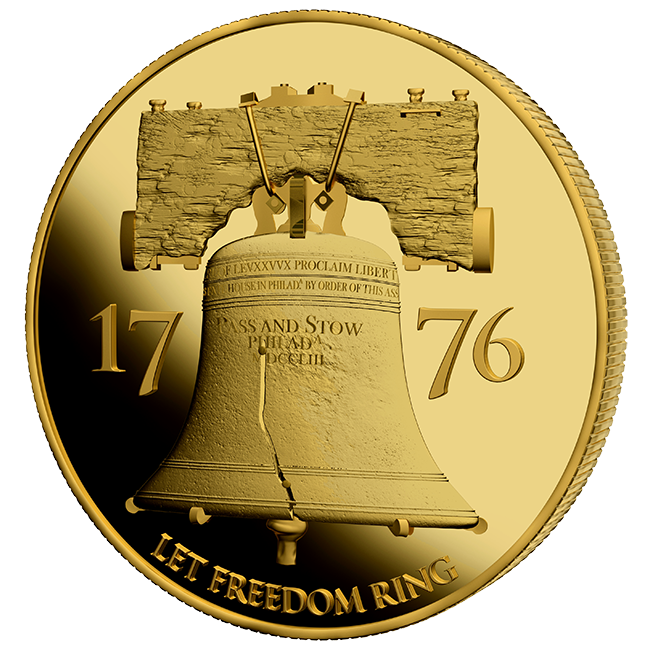
Their current images
On their website, the collection’s promo images were 3D renderings. It was clear they weren’t real coins, but they looked good enough and accurately reflected the coin’s design.
I set up my dynamic axial lighting, which I use for most raw coins and especially for mirrored or prooflike surfaces. I always put on a fresh pair of black nitrile gloves before handling coins, just like a doctor getting ready for surgery. With gloves on, I took the first coin out of its capsule and placed it under the camera. Everything looked good through the viewfinder, so I took the shot.

Since I shoot tethered, the images appeared on my monitor right away. The first photos looked good. The mirror finishes came out well, and I saw nice gradients across the surfaces. I kept going and finished the whole series.

Coin image at 800 × 800 pixels, website presentation size
The real surprise came during editing, when I compared my photos to the mint’s renderings. I expected some differences, but not such a big gap. The renderings had sharp lines, deep details, and intricate designs. My photos, on the other hand, looked like they’d been cast in sand.
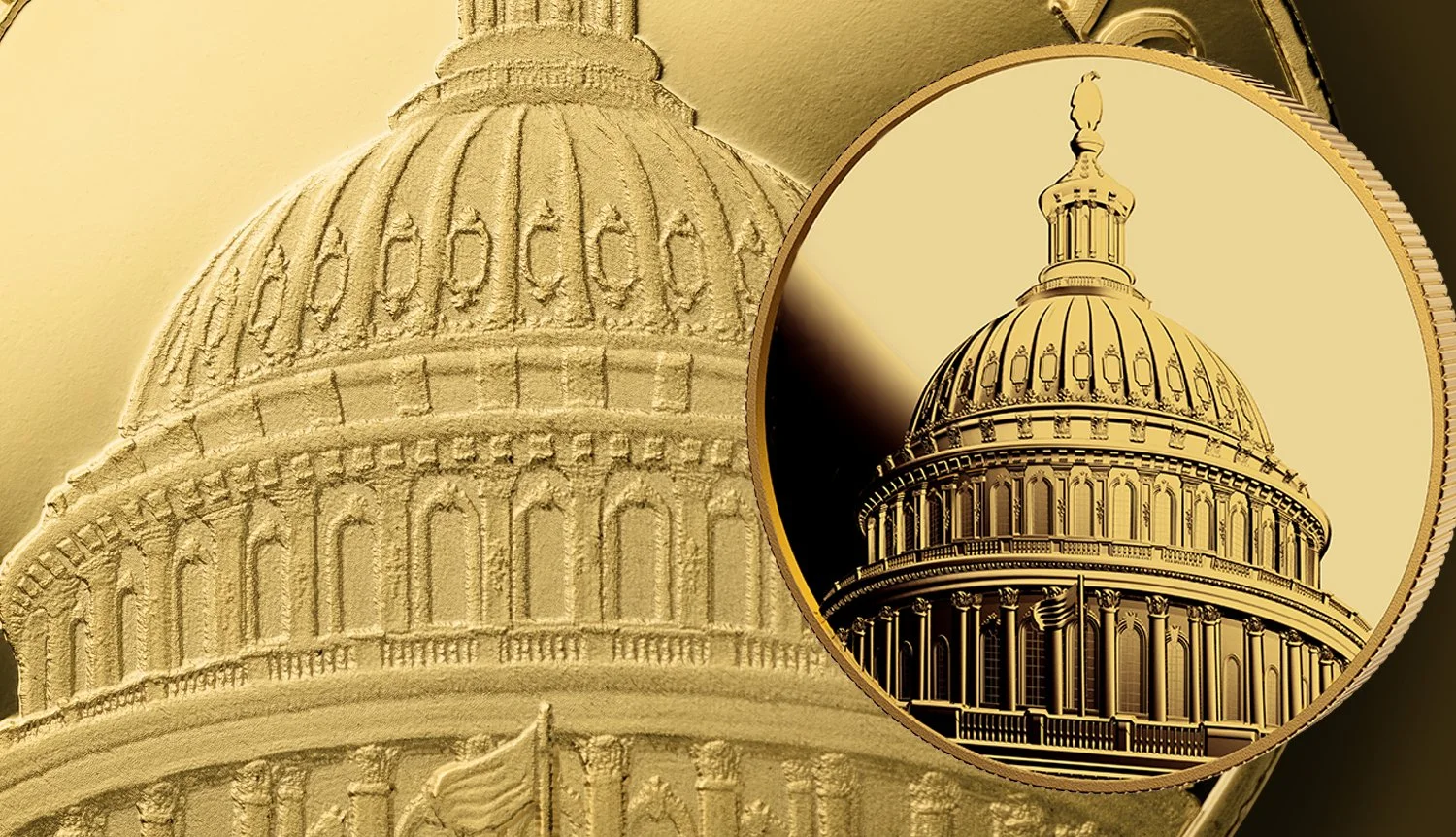
Side-by-side comparison of the rendering and my coin image, at 100%.
I figured the coins were plated after being struck, so I expected them to lose some sharpness. But what I saw was much worse than that. Whole layers of fine detail in the renderings just weren’t there on the real coins. I assumed renderings were concept art, but they showed a coin that the real product couldn’t match.
When I sent the images to the client, they were surprised. They liked the technical quality of the photos but were disappointed with the content.

The clamshell cases had the same issue.
In the manufacturer’s renderings, the printed logo inside the lid looked sharp and elegant. In my photos, you can see the ink sitting unevenly on the fabric, slightly blurring. Things your eye glosses over in hand are uncomfortably evident here. Like the old saying about a silk purse and a sow’s ear, high-resolution photography does not perform miracles.
In the end, the mint decided not to use the individual hero shots or close-up clamshell images on their website. They still paid for them, though.
On the bright side, they used the group and banner shots—any images where the fine details weren’t as noticeable.

The lesson here is simple, and I tell customers this whenever I get a similar project that crosses my desk. In numismatic photography, more detail usually means more value; however, the goal is to serve the product. There are situations when the most technically accurate image isn’t the most useful for selling. So before you go for maximum resolution, consider whether the product can handle that level of detail.
Because sometimes the lens tells the truth a little too loudly.
A Final Thought
Thank you for reading this blog post! I hope you found it informative and enjoyable.
If you're interested in similar topics, be sure to check out our other posts on numismatic subjects. From coin history to coin photography, we have lots to offer.
Don't forget to leave a comment below with your thoughts and feedback. We love hearing from our readers, and it helps us improve our content.
Thank you again for your support, and we hope to see you back here soon! Happy collecting!